


Development
Let's talk about what it is that we're actually offering and how it's different from what you might've been offered in the past.




What You Get
What you get is a fast SvelteKit + Cloudflare web app. The stack is colloquially known as “Cloudflare-native” or “Full-stack Cloudflare”, because we use Cloudflare's edge infrastructure for all of our needs, including file storage and database behind the scenes.
The final website combines all the strong sides of all previous web technologies that ever existed:
- It's fast on the client-side like a JS web app;
- It's fast when fetching data and files from the backend, as if you had a distributed network of servers around the world;
- It's peak SEO-friendly, just like server-rendered sites like those on WordPress;
- It's secure, Cloudflare provides default DDoS protection against zombie bot waves by default;
- And most importantly, it's pretty much unkillable.
How Unkillable Is It?


Because your backend is handled by the entire network of CF's 300+ datacenters worldwide instead of a single server, your local business site can handle literally Superbowl levels of traffic without breaking a sweat. You might break past the free tier usage limits when that happens and get a slightly higher bill next month.
But you NEVER have to worry about your website being down, because it was overwhelmed with visitors checking/booking/buying your products and services. It'll proudly stay standing even if it's attacked by someone with a nation state level or resources.
The only reason why your site could go down is if the Cloudflare network itself goes down. Which happened only about 4-5 times in the past 20 years, for brief periods and only in certain regions. And even then most of them weren't attacks, but rather them pwning themselves with a rushed software update.
So the answer is -- it's as unkillable as it can possibly get for a consumer-grade project. Above that is only the NSA and the Military tech.
Is It an App or a Website?


Is It an App or a Website?
For the sake of simplicity, we'll refer to what we build as “websites” on all other pages. Because that is what people are looking for, and what we need Google to pick up. And because our apps do play the role of a website in the traditional understanding.
But in the most technical sense, all websites that we create are web apps. Meaning there's a JavaScript engine behind the scenes that intercepts and processes all client interactions instead of letting those requests and events be handled by the browser's built-in mechanisms.
In other words, when you navigate to another page, browser never really loads entire new page from scratch. Instead, our app logic loads new page body, swaps it in place of the old one and changes the url in the address bar. From the browser's perspective, it looks like it never truly navigated anywhere. Just that the JS code on the initial page did some shenanigans. But full page reload never happened.
How Is It Different?


How Is It Different?
This is a superior way of organizing things and the gold standard for the biggest company websites today, because it dramatically reduces the perceived delay between navigations to almost non-exitent (like browsing local folders on your computer). It also completely eliminates any screen “flashes”, plain white background while the page is loading or some sort of spinner loader. And even more importantly, it makes the so-called “global state” possible across all the pages.
Normally browser loads new HTML, CSS, and JavaScript for each new navigation. Making all pages live in their own isolated bubbles from the code's point of view. In a web app, all pages have access to the same data anywhere inside your application. Making in possible, for example, to persist the user's cart and its contents across pages without any extra code, and allowing to keep things like pagination and sort filters exactly as the user left them when they navigate away and back from/to the product gallery.
Evolution of the Web
Think of the evolution of web technologies as a progression from purely static HTML pages, to sites based on CMSs like WordPress and Drupal, to modern hybrid-rendered, edge-hosted JavaScript apps powered by reactive frameworks like Svelte, Vue, and React.


Backend Features
All our sites come with a completely custom dashboard that you can log into right from your website without the need to open another window for your separate CMS provider/service. Depending on the package you choose, it can be just a convinient place to manage your leads that fill out the form on your site, to fully-fledged CMS with the ability to change content on your site, add new pages, edit galleries, edit products and availability. On the custom plan there can even be accounts for team members and clients.
Leads Manager

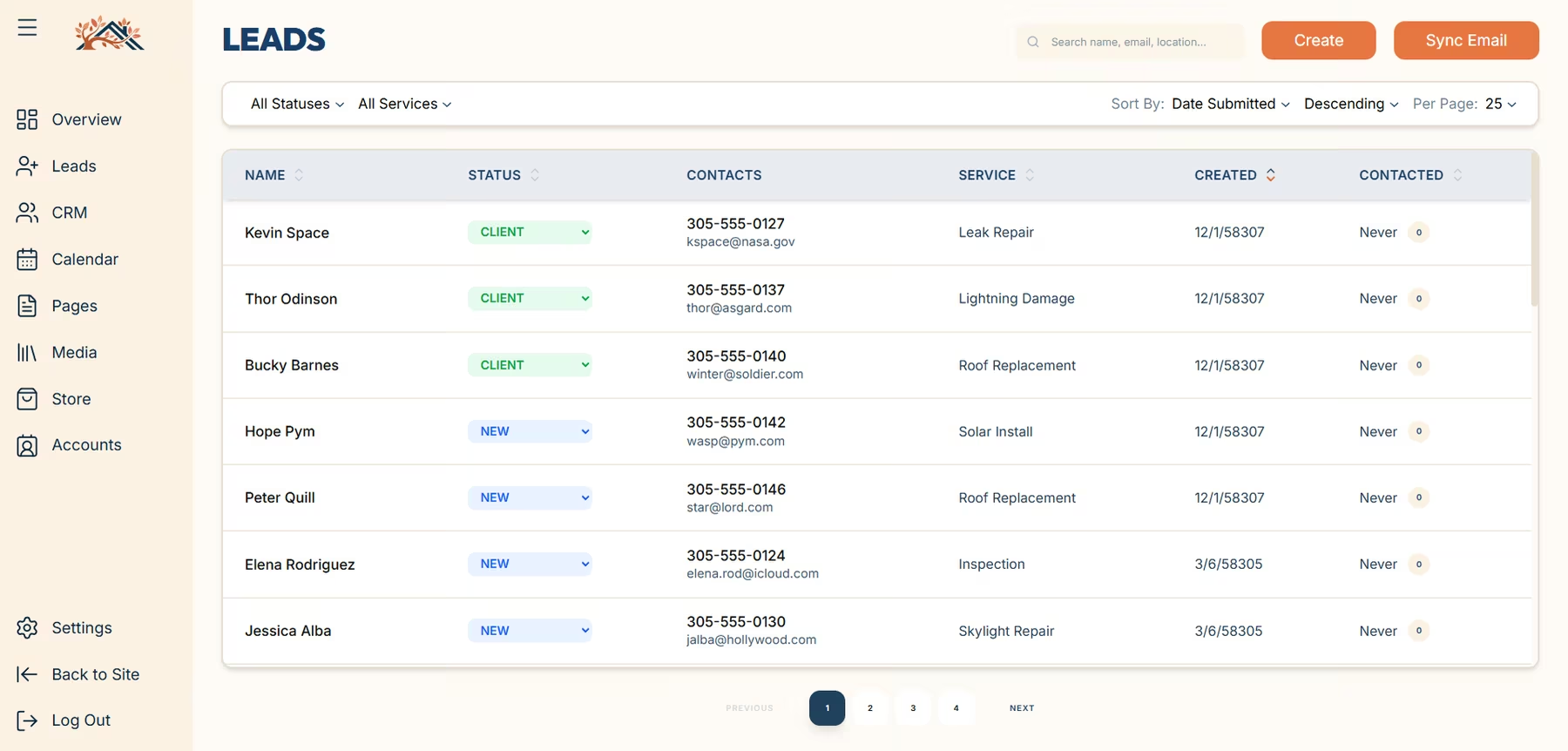
Leads Manager
A straightforward table to store all the information that people fill about themselves through the booking form on your website. It's fast, it's sortable and editable. You can assign tags to individual records and add comments. Easily manage your warm leads and keep track of whom you've reached to, pinged, had a call with.
Media Manager

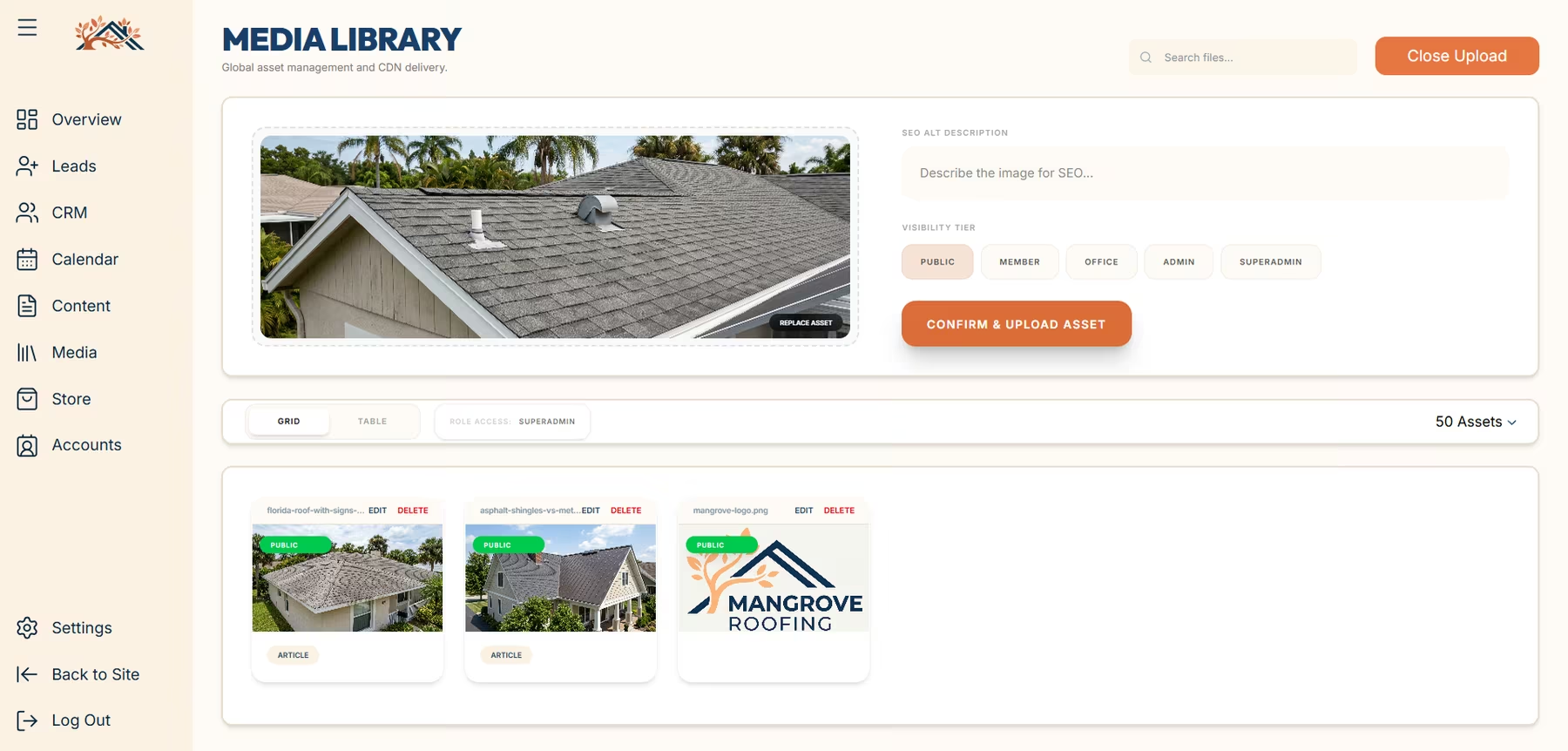
Media Manager
A tab to edit all the dynamic media on your site like images in a gallery or blog articles. Upload new, delete, and se at a glance where each of them is used.
Content Manager

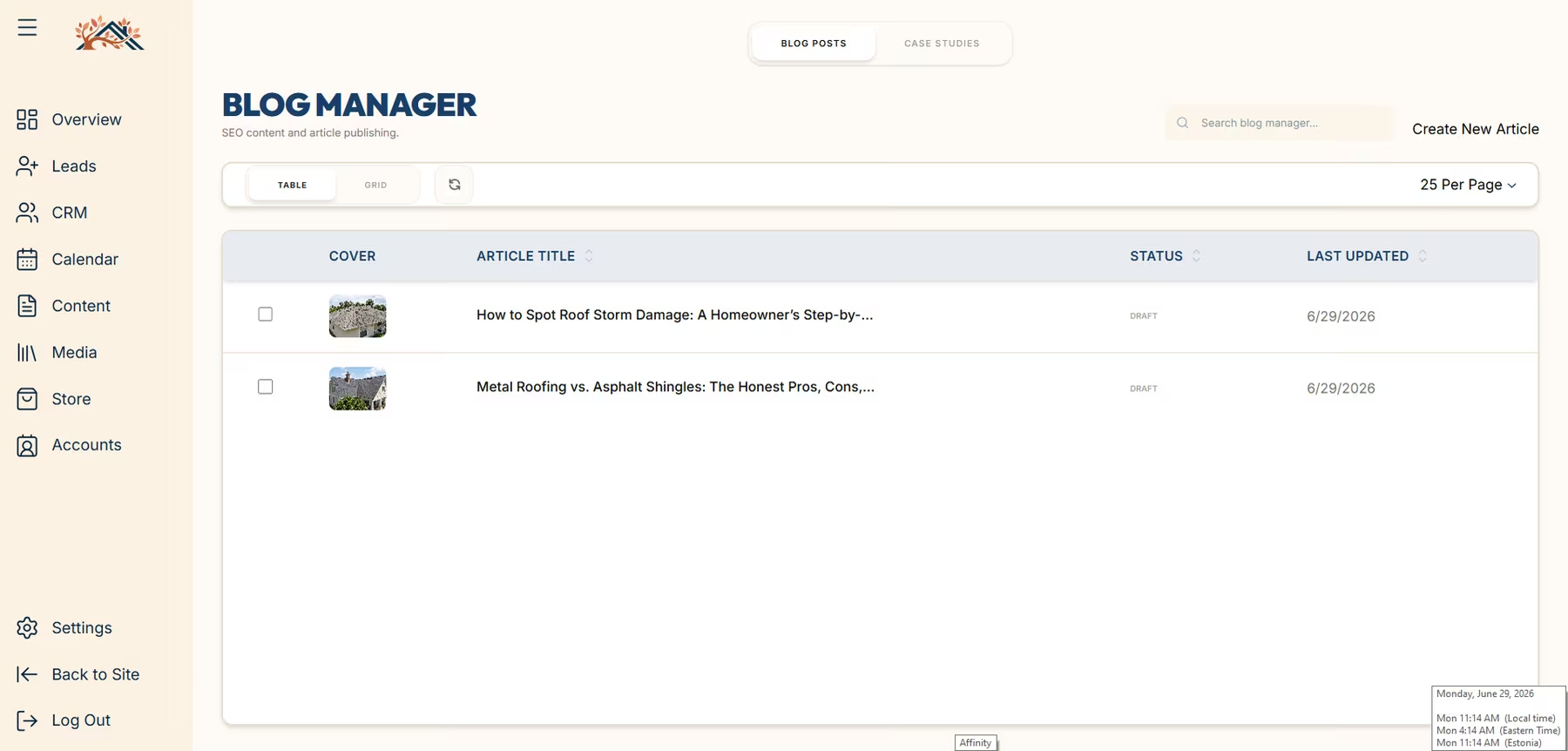
Content Manager
An section of the dashboard to edit blog or any other dynamic pages like case studies or bottom-of-funnel SEO landing pages. As well as managing site variables. Any block of information on your site could be turned into a variable like team members, seasonal announcement banner, or your phone number. So that you always have access to the most frequently changing piece of information straight from your dashboard.
Page Editor

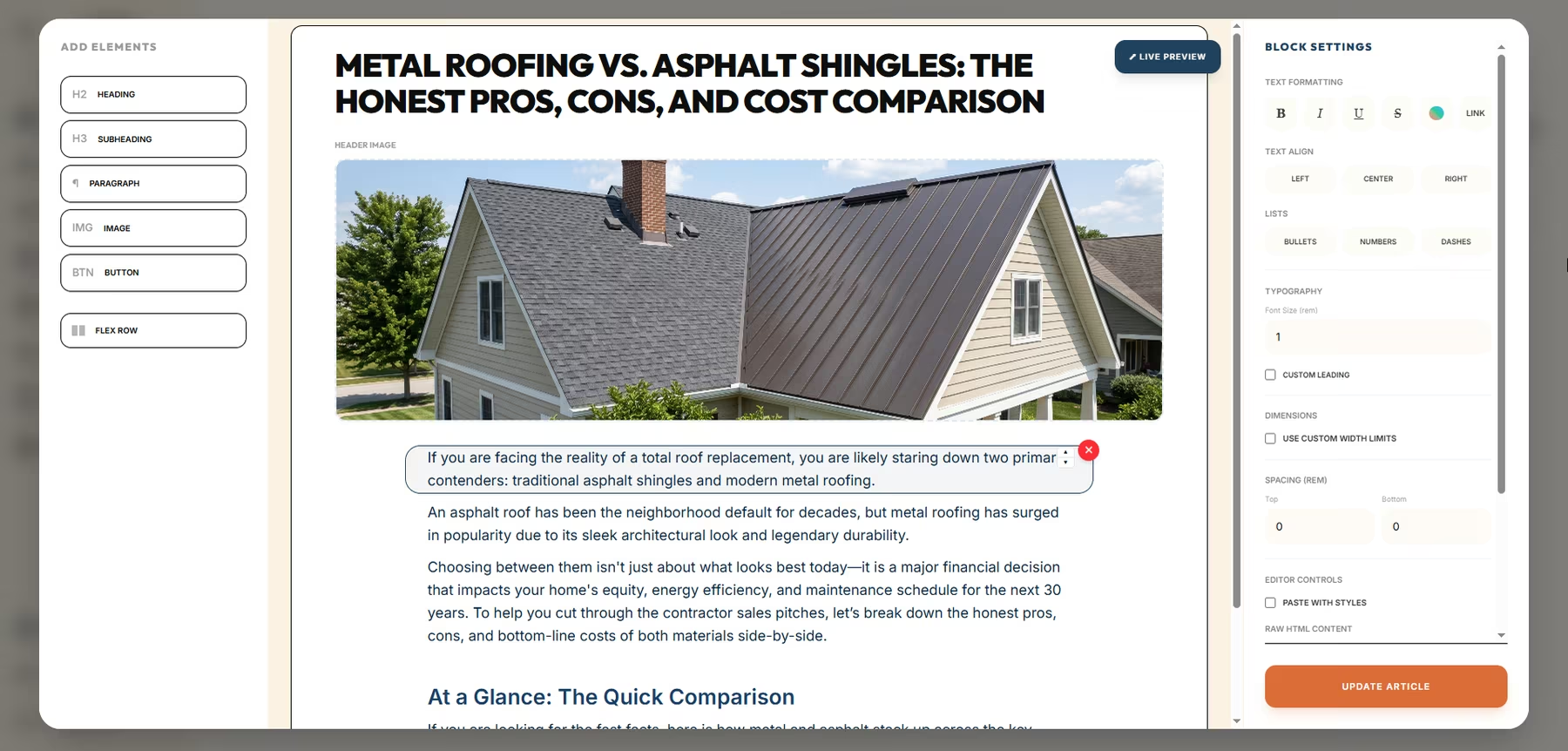
Page Editor
This is our own custom page builder that we ship in its entirety on Standard and Custom Scope packages. It's not the most flexible in the world, but it is perfectly sufficient to compose a typical blog article by stacking blocks like: heading, text, image, button, image + text, three cards in a row. It uses pure JSON to store all your articles directly in Cloudflare DB with no thrid-party servers or APIs. Which keeps finished pages loading very fast, almost as much as static marketing pages on the rest of the site. It can also be repurposed to write not just blog articles, but also things like case studies and BOF SEO/sales landing pages.
Mini-CRM

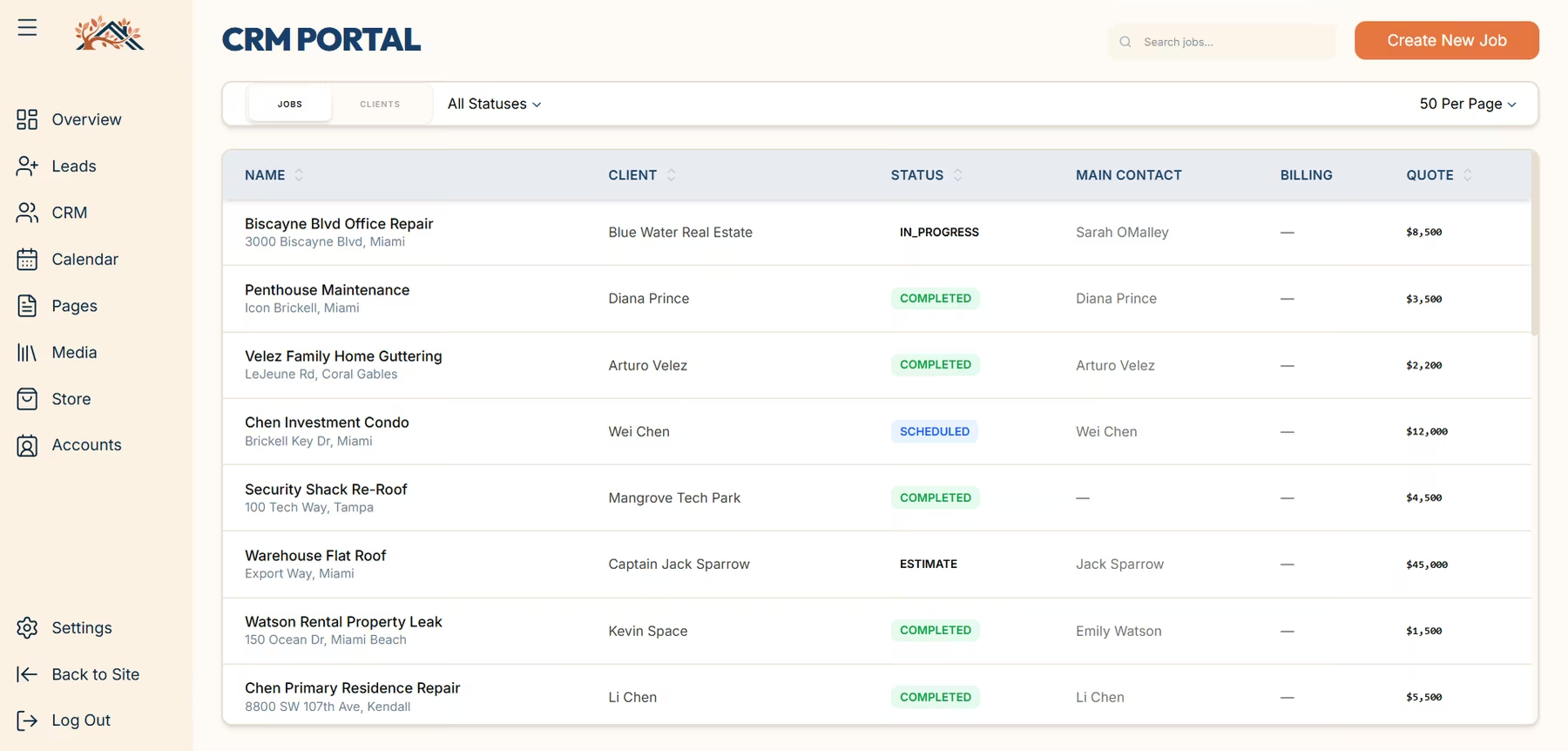
Mini-CRM
Available on Custom Scope package. Specifically aimed at local service contractors. It is a logical extension of the Bookings Manager that allows keeping track of your leads after they convert into paying customers. Separate tables to view jobs and clients. Nestable clients that can be a person or an organization/household full of people. Inside each client's tab there a history of their projects, lifetime value, latest invoices, history of convesations. Inside individual jobs - all the techs assinged to it, their comments, status, expences. Is it being actively developed and serves as a base ot be further customized to your precise needs.
E-commerce
Coming Soon
E-commerce
Available on Custom Scope package. It is a lightweight alternative to Shopify for small stores that don't want to get into Shopify's eternal subscription system just for a local, boutique, or personal shop, merch store, and things like that. Stripe or Square will handle all the payments and taxes. And your site will simply provide a list of items and prices for their trusted checkout pages. Paired with ability for users to create their own accounts and check purchase history. Very fast SKU ediitng and management just like everything else on your custom dashboard.
Still Deciding?
Check These:
OR